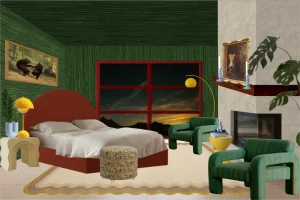
Maximizing Small Bedroom Space for Urban Digital Nomads
Let’s be honest. The digital nomad life in the city sounds incredible—freedom, culture, Wi-Fi in every café. Until you open the door to your actual living space. That tiny bedroom in a shared apartment or micro-studio that costs a small fortune. Suddenly, your laptop, gear, and need for a functional workspace crash into your need for, well, a place to sleep.
Here’s the deal: a small space doesn’t have to be a productivity prison. With some clever strategy, you can transform that cramped room into a multi-functional hub that supports your work, rest, and sanity. It’s about working smarter, not necessarily having more square footage.
The Core Mindset: Fluidity Over Fixed Zones
First, forget the traditional idea of a “home office.” In a small bedroom, every inch needs to pull double, even triple duty. Your desk might also be your dining table. Your bedside table? That’s your charging station. The floor is your yoga studio. Embracing this fluidity is the first, non-negotiable step for any urban nomad looking to optimize their space.
Vertical Space: Your Untapped Real Estate
Look up. Seriously. Walls are the most underutilized asset in a small bedroom. Floor space is gold, so stop putting things on it that don’t absolutely need to be there.
- Floating Shelves: These are your best friends. Use them for books, supplies, even a small printer. Keeps your desk surface clear.
- Pegboards: Honestly, a game-changer. Mount one above your desk for headphones, cables, notebooks, and tools. It’s visually organized and frees up precious drawer space.
- Over-the-Door Organizers: Not just for shoes. Use the pockets for tech accessories, stationery, or even rolled-up clothing.
The goal is to get everything you can off your horizontal surfaces. Think of it like a city skyline—you build up, not out.
Furniture That Works As Hard As You Do
This is where your investment counts. You need pieces that transform. A static, bulky desk in a tiny room? It’s a space-hogging monument to inefficiency.
| Furniture Type | Smart Function | Nomad Benefit |
| Murphy Bed (with desk) | Folds up to reveal a desk or clear floor space. | Creates a definitive psychological shift from “bedroom” to “office.” |
| Loft Bed | Sleeping area on top, work/relax zone below. | Physically separates sleep and work zones in one footprint. |
| Nesting Tables / Carts | Roll out when needed, tuck away after. | Provides flexible surface area for projects, meals, or extra monitor. |
| Storage Ottoman | Seating, footrest, and hidden storage in one. | Perfect for stashing cables, seasonal gear, or extra blankets. |
If a Murphy bed isn’t in the budget, get creative. A simple wall-mounted fold-down desk can be your command center by day and vanish by night. The key is that nothing has a single, fixed purpose.
Taming the Tech & Cable Chaos
For a digital nomad, cords are the enemy of a clean, functional space. A tangled mess is a tripping hazard and a mental clutter magnet.
- Cable Management Kits: Use sleeves, clips, and boxes to bundle wires. It looks neater instantly.
- Go Wireless Where Possible: A wireless mouse, keyboard, and headphones cut three cords immediately.
- Designated Charging Station: One power strip in a specific spot (on a shelf, in a drawer) for all devices. No more hunting for chargers under the bed.
The Psychology of a Multi-Functional Space
Okay, so you’ve got the furniture and storage sorted. But how do you mentally switch off from work when your bed is three feet from your desk? This is the real challenge for digital nomads in studio apartments.
You need sensory cues. Rituals, even small ones, that signal to your brain a change of mode.
- Lighting is Everything: Use bright, cool-toned light for work hours. Then, switch to warm, dim lamps or smart bulbs for the evening. This mimics natural circadian rhythm.
- The “Commute”: At the end of your work day, shut down your laptop, put it in a bag or drawer, and physically “commute”—maybe just to the kitchen to make tea. That two-minute ritual creates a boundary.
- Change the View: If possible, sit in a different spot for relaxing than where you work. Even rotating your chair 90 degrees can help.
Decluttering: The Non-Stop Process
Clutter expands to fill the space available. In a small bedroom, it feels oppressive within days. Adopt a minimalist mindset, but a practical one. You don’t need to own nothing, but everything you own should have a clear purpose and a designated home.
Do a weekly “reset.” Ten minutes every Sunday to put things back in their vertical homes, clear off surfaces, and reassess what’s out. It’s less about deep cleaning and more about maintaining the system you’ve built. Because when your physical space is clear, honestly, your mind often follows.
A Final, Human Thought
Maximizing a small space isn’t just a logistical puzzle. It’s a continuous, slightly messy dialogue between you and your environment. Some days the cables will win. Some days you’ll work from the bed and that’s okay. The point isn’t perfection—it’s creating a space that, most of the time, supports the unique, fluid life you’ve chosen. A life that trades square footage for freedom, and with a few smart tweaks, doesn’t have to feel like a compromise at all.