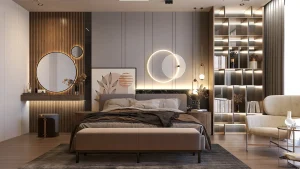
Multi-Generational Bedroom Design: Creating a Sanctuary for Adult Children or Elderly Parents
Let’s be honest—designing a bedroom for an adult child moving back home or an aging parent moving in is a unique challenge. It’s not just a guest room. It’s a permanent, private sanctuary that needs to balance independence with safety, personal style with practicality. Honestly, it’s about designing for dignity at any age.
Here’s the deal: a successful multi-generational bedroom design goes way beyond a bed and a nightstand. It’s a thoughtful blend of empathy and smart planning. Let’s dive into how to create a space that truly feels like home, whether you’re accommodating an adult child after college or ensuring comfort and safety for elderly parents.
The Foundation: Safety, Privacy, and Autonomy
Before we talk paint colors or furniture, we have to address the bedrock principles. A room that works for multi-generational living absolutely must get these three things right.
1. Prioritizing Safety & Accessibility
This is non-negotiable, especially for elderly parents. Think of it as “future-proofing” the space. The goal is to minimize fall risks and make everyday actions effortless.
- Flooring is everything. Ditch high-pile rugs and slippery surfaces. Opt for low-pile carpet, luxury vinyl plank, or cork—anything with a bit of grip and minimal tripping hazard.
- Lighting the path. Install motion-sensor night lights between the bed and the bathroom. It’s a simple, genius solution for those midnight trips.
- Clear and wide pathways. Ensure there’s at least 32 inches of clear space for easy navigation, potentially for a walker or wheelchair. That means rethinking furniture layouts entirely.
2. Designing for Privacy and a Sense of “Ownership”
This person isn’t a guest. They need to feel this is their domain. Soundproofing helps—think heavy curtains, rugs, and even acoustic panels if the budget allows. More importantly, involve them in the design process. Let them choose the artwork, the bedding, the little knick-knacks. That personal touch transforms a room from a landing pad into a haven.
Smart Design Strategies for Any Age
Okay, with the foundation set, we get to the fun part: the actual design. These strategies work whether you’re designing for a 25-year-old or an 85-year-old. It’s all about adaptable, flexible thinking.
Furniture that Works Smarter
Bulky, sharp-cornered bedroom sets? Forget ‘em. Today’s multi-generational bedroom furniture needs to be a chameleon.
- The Adaptive Bed: For elderly parents, an adjustable bed can be a game-changer for comfort and health. For an adult child, a sturdy platform bed with massive underneath storage solves two problems at once.
- Seating that Serves: Include a comfortable, sturdy chair with arms (makes sitting and standing easier) and a small side table. It creates a “spot” for reading or chatting that isn’t the bed.
- Vertical Storage: Floor space is premium real estate. Use tall dressers, wall-mounted shelves, and over-door organizers. It keeps the floor clear and essentials within easy reach.
Lighting: Layered and Intuitive
One overhead light is the enemy of a cozy, functional room. You need layers.
- Ambient: A central ceiling fixture on a dimmer.
- Task: A focused reading light by the chair and bed—swing-arm lamps are perfect.
- Accent: Small LED strip lights under a nightstand or in a closet for soft, low-level illumination.
And remember those motion sensors? They’re the unsung heroes of accessible bedroom design.
Tailoring the Space: Adult Child vs. Elderly Parent
While the core principles overlap, the nuances matter. Here’s a quick breakdown of where the focus might shift.
| Design Focus | For the Adult Child (Boomerang Kid) | For the Elderly Parent (Aging in Place) |
| Primary Need | Autonomy & a launchpad; separating work/life | Safety & ease; maintaining independence |
| Key Furniture | Desk/workspace, modular storage, sofa bed for friends | Adjustable bed, sturdy chair with arms, medical equipment storage |
| Tech Integration | Strong, dedicated Wi-Fi, charging stations, smart home controls | Medical alert systems, simple remote controls, voice-activated lights |
| Style Approach | Collaborative, trendy, reflects their adult identity | Familiar, comforting, evokes positive memories (heirlooms, family photos) |
See? The same room shape, but two different souls. For the young adult, you might be carving out a mini-apartment. For a parent, you’re creating a safe, serene retreat that supports their changing physical needs.
The Little Things That Make a Big Difference
It’s often the subtle, almost invisible details that elevate a room from “fine” to “fantastic.” These are the touches that show deep consideration.
- Outlet & Switch Height: Raise electrical outlets and lower light switches to prevent excessive bending or reaching. It’s a small renovation with massive impact.
- Door Lever Handles: Replace round doorknobs with lever-style handles. They’re easier for arthritic hands to operate.
- Contrast is Key: Use color contrast to define edges. A light switch plate on a dark wall, a dark comforter on a light bed—it helps with visual clarity.
- Temperature Control: If possible, give them control of their own thermostat or provide a portable heater/fan. Personal comfort is power.
Wrapping It Up: A Room for Real Life
Designing a multi-generational bedroom isn’t about interior design perfection. It’s messy, it’s personal, and it’s profoundly human. It’s about listening more than prescribing. It’s about building a space that says, “You belong here, just as you are.”
Sure, you’ll pick out paint and shop for lamps. But what you’re really building is a foundation of respect—a physical manifestation of care that allows for both connection and independence. And in the end, that’s the most beautiful design of all.